
The Unnoticed Design Element That Draws Millions of Visitors and Revenue to Burj Khalifa
Updated: May 28
Every night, something extraordinary happens in Dubai. At precisely sunset, the world's tallest building transforms into a canvas of light that stretches 828 meters into the sky.
Yet most people can't pinpoint exactly what makes them stop, stare, and pull out their phones.
It's not the height. It's not the architecture alone.
It's the lighting.
Table of content
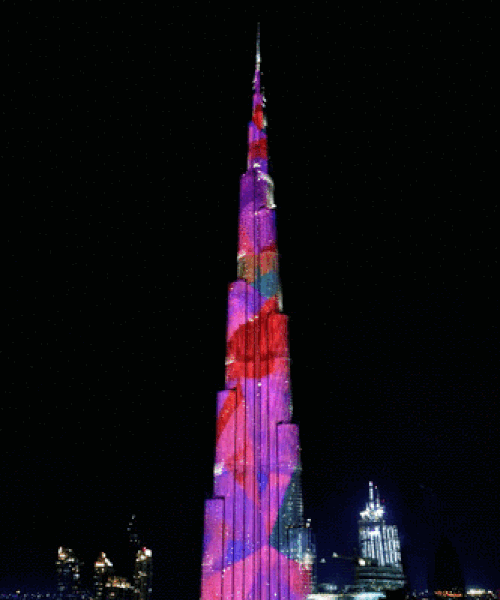
Yes, you read that right. The thing most people barely notice consciously is generating approximately $621 million annually in ticket revenue alone, attracting 17 million visitors, and commanding advertising rates up to $272,000 for just three minutes of display time.
That's crazy, right?
But here's what's even more fascinating: This wasn't always the plan. Let me tell you how one decision turned a skyscraper into the world's most valuable vertical billboard.
The 7-Month Installation That Changed Everything
Picture this: It's 2017, and Emaar Properties has a problem. The temporary LED system they installed back in 2015 for special events? It's falling apart. So they make a decision that seems ambitious even by Dubai's "go big or go home" standards—replace the entire thing with a permanent, high-resolution LED media facade covering 770 meters of the structure.

Now, get this—the numbers behind this installation are absolutely staggering. We're talking about 28 kilometers of V-Stick linear LED lights containing 1,139,144 individual RGB pixels. That's over a million lights, each one individually controllable.
But wait, it gets better. Installers had to lay 250 kilometers of cable—enough to stretch from Dubai to Abu Dhabi and back. A team of 50 rope access specialists worked day and night for seven months, installing approximately 500 meters of lighting per day. Can you imagine hanging off the world's tallest building, 500+ meters in the air, installing lights?
But here's the genius part—the new system had 20 times more resolution than the previous installation. Every single LED could be individually controlled, creating a vertical screen larger than 100 football fields. This building could now display anything—national flags, corporate logos, birthday messages, breaking news.
The system debuted at the "Light Up 2018" New Year's celebration and immediately broke the Guinness World Record for the largest light and sound show on a single building. The display covered 109,252 square meters—more than double the previous record set in Hong Kong.
Get this: Over 1 million people attended in person. And an estimated 2.5 billion people—yes, billion with a B—watched through live television broadcasts and social media streams.
That's when everything changed.
How Light Became the World's Most Valuable Advertising Real Estate
Okay, so let's talk about money. Because this is where things get really interesting.
The Burj Khalifa completely shattered every metric used in outdoor advertising. Here's the deal: Approximately 17 million people visit the Burj Khalifa annually, making it the most visited landmark in the entire world. The building gets around 22 million Google searches per year. Each evening display is viewed by hundreds of thousands of people on-site, with millions more seeing it through social media within hours.

So what does it cost to advertise on this monster?
Hold onto your seats. A three-minute advertisement on the Burj Khalifa starts at AED 250,000—that's approximately $68,000—during weekdays between 8-10 PM. Sixty-eight thousand dollars for three minutes.
And that's just weekdays! Weekend rates jump to $95,000 for the same three-minute slot. Want multiple impressions? Five three-minute displays between 7 PM and midnight will cost you AED 1 million ($272,000).
Let me repeat that: $272,000 for 15 minutes total of advertising spread across one evening.
Now you might be thinking, "That's insane! Who would pay that?"
The Psychology Behind the Premium
When your message appears on the world's tallest building, something psychological happens. Height equals status. Height equals authority. The Burj Khalifa doesn't just display your brand—it elevates it, literally and metaphorically
Think about the location. The building sits in Downtown Dubai, surrounded by The Dubai Mall, the Dubai Fountain, and world-class hotels. These aren't random tourists—these are international travelers and high-net-worth individuals who came specifically to experience this area.
The Viral Effect (This Is Where It Gets Really Good)
Here's what makes this advertising space unique: Every major display becomes news. Automatically.

When Samsung launched their Galaxy products on the Burj Khalifa, the display generated millions of social media impressions within 48 hours. Major brands that have advertised include TikTok, Disney, Cartier, Huawei, and Meta during their company rebrand. Each campaign didn't just buy advertising space—they bought guaranteed global news coverage.
Media outlets worldwide keep cameras trained on this building. This multiplier effect means the actual audience is exponentially larger than just the physical viewers. You're not paying for 500,000 views—you're paying for 50 million views.
Can you see why brands are lining up?
The Revenue Streams Nobody Talks About
Okay, so we've covered advertising. But the advertising revenue? That's just the beginning.
The Tourism Multiplication Machine
The Burj Khalifa generates approximately $621 million annually just in ticket sales. Six hundred twenty-one million dollars from tickets alone. With an average entry fee of $37 and 17 million annual visitors, this tower has become the highest revenue-generating landmark in the entire world.
Now here's what's fascinating: Back in 2013, the building was getting 1.87 million annual visitors. Fast forward to recent years? That number exploded to 17 million. What changed? Dubai's tourism infrastructure expanded dramatically—more flights, better hotels, enhanced attractions. Social media made the city a bucket-list destination. But here's the thing: The lighting system upgrade played a significant role in this growth.
The enhanced lighting displays created a compelling new reason to visit during evening hours. People don't just want to see the tallest building anymore—they want to see the show. They want to experience the spectacle. The lighting transformed a daytime landmark into a 24/7 attraction.
The Downtown Dubai Effect
The Dubai Mall, directly adjacent to the tower, is the world's most-visited retail and lifestyle destination. During New Year's celebrations, the area processes over 1 million visitors over just 72 hours. That's a million people in three days!
Restaurants with Burj Khalifa views report significantly higher revenue during evening hours. Some establishments charge premium rates for tables with direct sightlines. The "Burj Khalifa view" has become its own marketable commodity.
And here's something wild: Properties with views of the illuminated Burj Khalifa command substantial premiums. Developers explicitly market "Burj Khalifa light show views" as a primary selling point. The lighting system is literally increasing property values across an entire district.
The Design Genius Behind the Magic
So how did they actually pull this off? The Burj Khalifa features polished stainless steel architectural fins running the entire length—drilling into them wasn't allowed.

The engineering team designed special stainless steel brackets that hug the fin and clip onto its back edge—no drilling required. These brackets were polished to match the exact finish of the architectural fins. The result? A seamless feature that virtually disappears when the lights are off.
The entire 1.2 million LED system is controlled from a single central control room. Every pixel is addressable for complex animations. And here's what's impressive: According to reports, no significant signal loss has occurred during a live show. With over a million LEDs, thousands of connections, and kilometers of cable exposed to desert heat and sandstorms, the system has never experienced a major failure during a live display.
Through years of experimentation, they've learned what works: Movement creates attention. Simplicity wins at scale—bold colors and clear messages go viral, while complex designs fall flat. Strategic timing matters—displays at 8 PM Friday generate significantly more views than late Tuesday night.
The Economic Multiplier Effect
The Burj Khalifa's lighting doesn't just generate revenue for the building—it powers a massive surrounding economy.
When visitors witness an evening light display, they stay in Downtown Dubai longer. Those extended minutes translate directly into additional spending at restaurants, cafes, shops, and attractions. With tens of thousands of daily visitors, even modest increases in dwell time generate millions in additional economic activity.

An entire photography economy has emerged around the illuminated tower. Professional photographers charge hundreds to thousands for photo shoots with the lit tower as backdrop. Instagram has transformed the building into one of the world's most photographed structures, with every display generating millions of tagged images.
New Year's Eve celebrations have become globally recognized spectacles. The 2018 and 2019 celebrations each attracted over 1 million in-person attendees and earned multiple Guinness World Records. These events generate global media coverage worth hundreds of millions in advertising-equivalent value—free publicity on a scale money cannot buy.
What This Means for the Future of Architecture
Here's the reality: Most buildings around the world remain completely dark after sunset. They're invisible, forgettable, blending into the night. And that's a massive missed opportunity.
The Burj Khalifa demonstrated something crucial: Architectural lighting isn't decoration—it's infrastructure generating measurable economic returns. But here's what's important—you don't need a billion-dollar budget or 1.2 million LEDs to see results.

Even basic architectural lighting that can play simple animations, color transitions, and dynamic patterns will immediately set your building apart from every dark structure around it. Think about it—in a skyline of static buildings, even modest lighting makes yours the one people notice, photograph, and remember.
The system's scale matters less than the strategic thinking behind it. Whether you're working with a limited budget for basic color-changing LEDs or investing in full video-capable facades, the principle remains the same: Light creates value in the surrounding area, attracts attention, and transforms static architecture into dynamic experiences.
The Burj Khalifa's annual operating cost is approximately $408,000, kept manageable by solar panels saving 3,200 kilowatts daily. Against advertising revenue alone, the ROI is extraordinary. Cities worldwide are now viewing landmark illumination—at every scale—as economic development tools.
Content Strategy: The Missing Piece
But here's where the Burj Khalifa's real genius shows, and where most lit buildings still fail: content strategy.
Many buildings install lights, turn them on, and... that's it. Maybe they change colors seasonally. Maybe they stay one color forever. That's not a strategy—that's just having lights on.
The Burj Khalifa treated the building as a media platform from day one. There's a content approval team, a four-week advance submission requirement, and quality standards. Every display is planned, scheduled, and curated. This gatekeeping maintains prestige while monetizing strategically.
Whether your system can display full video or just run color sequences and animations, you need a content calendar. Plan displays for holidays, local events, community celebrations, and yes—commercial sponsorships scaled to your capabilities. Even simple lighting that responds to the community creates connection and value.
The Balance That Makes It Work
The balance between commercial and community use is crucial. When the Burj Khalifa displayed hope messages during COVID-19 or celebrated the UAE's Mars mission, it reinforced its role as national pride, not just commerce. Buildings maintaining community connection while pursuing revenue achieve both social license and economic performance.
This applies whether you're the world's tallest building or a 20-story office tower. Use your lights to celebrate your city, honor causes, mark occasions. Then, when commercial opportunities come, you've already built goodwill and attention that makes those sponsorships more valuable.
The Future: Where Lighting Design Is Heading
The evolution doesn't stop. In November 2024, Emaar announced a revolutionary facade lighting upgrade featuring dynamic RGBW technology with even more complex capabilities.
Interactive and Responsive Displays
Future systems will respond to real-time data, crowd input, and environmental conditions. Imagine standing in Downtown Dubai, typing a message on your phone, and moments later seeing it appear on the Burj Khalifa. The building has already experimented with limited versions of this.
That's not science fiction—that's the next few years.
Sustainability Integration
Next-generation systems will consume 70% less energy while producing 30% more light. Solar integration will expand significantly. Future media facades will increasingly be net-zero or energy-positive installations. Because here's the reality: As impressive as these displays are, they need to be sustainable.
Augmented Reality Layer
AR technology will soon allow viewers to see additional content layers when viewing lit buildings through smartphones. The physical lights will anchor digital experiences personalized to each viewer. Imagine pointing your phone at the Burj Khalifa and seeing unique content based on your interests or language.
That's coming sooner than you think.
Conclusion: The Light That Changed Everything
The Burj Khalifa's lighting system attracts 17 million annual visitors, generates $621 million in annual ticket revenue, commands advertising rates reaching $272,000 for premium slots, and has broken multiple Guinness World Records.
But those numbers tell only part of the story.
The real impact is in what it represents—a fundamental shift in how we think about buildings. Architecture no longer needs to be passive or static. With the right technology and vision, buildings become active participants in urban life, economic catalysts, media platforms, and symbols of possibility.

Every night, as those 1.2 million LEDs Spring to life, they're not just illuminating a building. They're illuminating a vision of what modern architecture can be—dynamic, responsive, economically productive, and emotionally resonant.
The Burj Khalifa proved that the space between sunset and sunrise isn't downtime for architecture—it's an opportunity. An opportunity to create spectacle, generate revenue, attract visitors, and build global recognition.
That's the power of light. That's the genius that was hiding in plain sight all along.
And yes—it's absolutely transforming how we build, market, and experience our cities.
The Burj Khalifa demonstrates what's possible when lighting design meets strategic vision—let us help you discover what's possible for your building. Contact us to unlock your structure's potential. (btw, It's free..!)


Comments